
Business
How to Choose a Rugged Tablet for Construction Job Sites

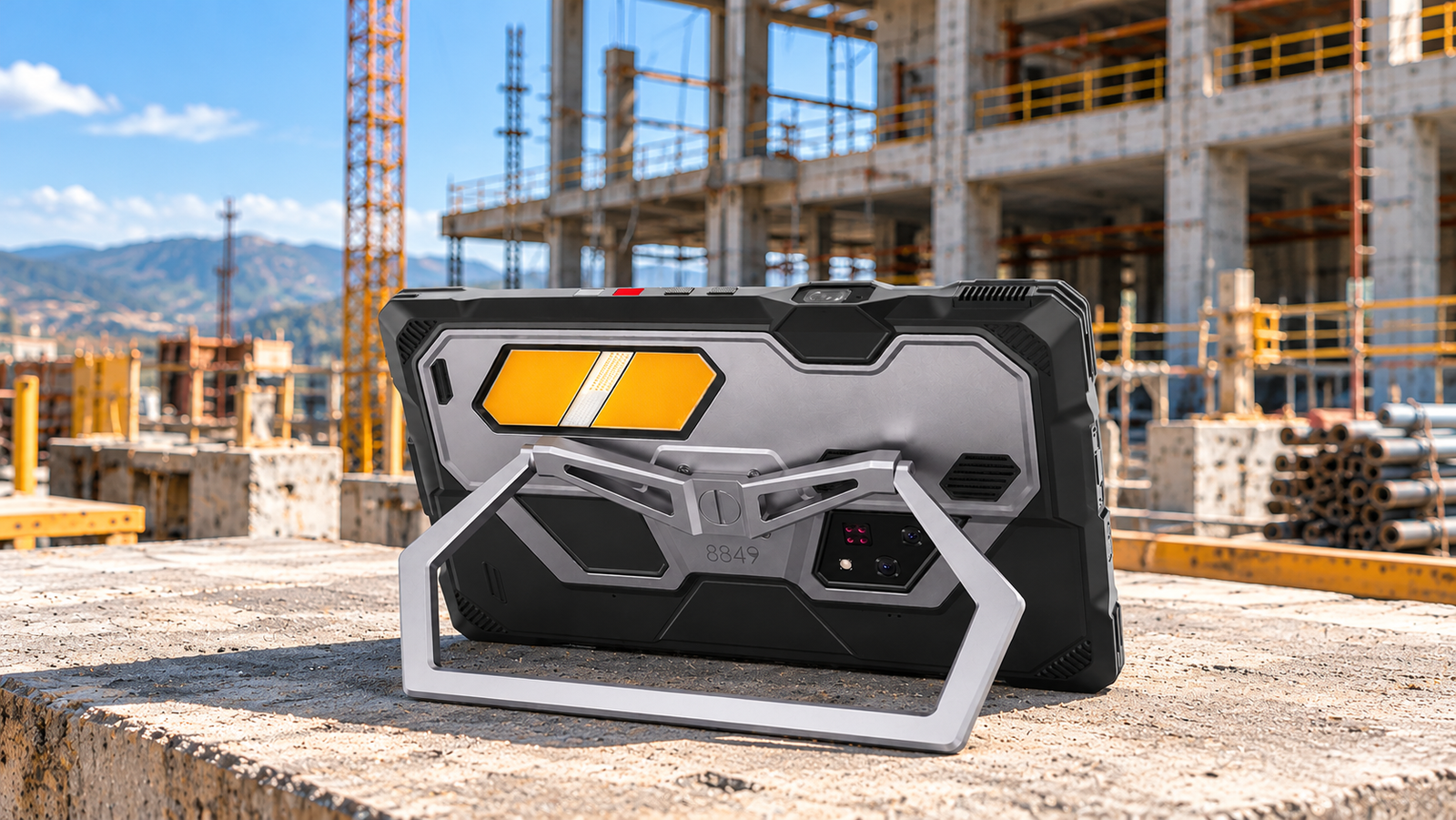
Construction crews rely on tablets to read drawings, mark up revisions, document progress, check schedules, and communicate across job sites. But construction environments expose devices to dust, rain, drops, vibration, bright sunlight, and long working hours—conditions that can quickly wear out an ordinary tablet.
A consumer tablet may handle these tasks in an office, but on an active site, durability, display visibility, battery life, and portability become just as important as performance. This guide explains what to look for in a rugged tablet for construction, which features are worth paying for, and how to avoid choosing a device that doesn’t fit your crew’s daily work.
Rugged vs. Standard Tablets: Which Do You Need?
It depends on where the tablet spends its day. If it lives in a site office or a truck cab and only goes outside occasionally, a standard tablet with a heavy-duty case may be enough. If it is carried across a site, set down on rough surfaces, and used in rain, dust, or heat, a rugged tablet is usually the cheaper choice over time, because it avoids the repair and replacement costs of a device that was never built for the conditions.
Essential Features to Look for in a Construction Tablet
Not every feature carries the same weight. This table separates what is essential from what is a useful extra.
| Feature | Why it matters on site | Priority |
| Dust and water protection | Helps protect against dust and rain | Must-have |
| Bright display | Keeps drawings readable outdoors | Must-have |
| Large battery and fast charging | Supports long shifts with limited charging opportunities | Must-have |
| Weight and mounting options | Makes the tablet easier to carry or use hands-free | Strongly recommended |
| Cellular connectivity and GPS | Helps with communication and positioning | Recommended |
| Built-in field tools | Can support quick measurements and crew briefings | Nice-to-have |
A site manager reviewing drawings may prioritize screen size and battery life, while an inspector working in confined spaces may value portability and specialized tools.
Durability and Water Resistance
Start with the ingress rating. IP68 covers dust and immersion under conditions the manufacturer specifies, and IP69K adds resistance to high-pressure, high-temperature water jets, which matters when equipment gets washed down. Read the stated test conditions, because most ratings are tested in still fresh water in a laboratory.
Then read the fine print. Seals and port covers wear over time, drop performance depends on the angle and the surface, and many warranties exclude liquid and drop damage. A rugged tablet lowers the odds of failure, but it does not remove them, so keep port covers closed and use the protective accessories that come with the device.
Screen Brightness and Outdoor Visibility
On a site, glare is a bigger problem than resolution. A bright display stays readable in direct sun, while a dim panel turns into a mirror the moment you step outside. Check the stated peak brightness, and test the screen outdoors if you can. If your crew wears gloves, test the touchscreen with them on before you commit.
A 10 to 11-inch screen is a practical middle ground for construction. It is large enough to read detailed schematics, and small enough to carry on a clipboard or mount in a vehicle.
Battery Life and Charging
A rugged tablet should comfortably outlast a working day, since crews rarely get a chance to recharge. Look for a large battery paired with fast charging, so a lunch break adds meaningful runtime. Reverse charging is a handy extra, because it lets the tablet top up a phone or earbuds in a pinch.
Treat stated charging times as best-case figures, since real speed depends on the charger and temperature, and projector or camera use drains the battery faster than reading plans.
Weight, Portability, and Mounting
Rugged hardware is heavier than a consumer tablet, and the difference becomes obvious after a few hours of carrying one. A large battery, a sealed body, and built-in tools all add weight. Decide up front how the tablet will travel: on a mount, in a vehicle, on a strap, or propped on a stand in a site office. A tablet that is fine on a stand can feel like a brick held one-handed all day.
Which Built-In Tools Actually Help on a Site?
Some rugged tablets add tools that replace separate gear. They are convenient rather than precise, so they suit quick checks and briefings, not certified layout or inspection work. The most useful ones are:
- A laser rangefinder for quick distance checks without a tape
- A built-in projector to show a drawing to a crew without an extra screen
- A night vision camera for documentation in dark spaces
- A bright light for stairwells and early starts
Connectivity, Storage, and Software Compatibility
Job sites can have inconsistent network coverage, so dual SIM support provides flexibility to use different carriers, while 5G offers faster mobile connectivity where available. Dual-frequency GNSS can also improve positioning in challenging outdoor environments. Storage matters because drawings, photos, and offline maps pile up quickly, and a card slot gives you room to grow. Before buying, confirm that the apps you use for drawings and project management run well on the tablet, since the hardware is only useful if your software works.
What Mistakes Should You Avoid?
Most poor purchases come from a short list of avoidable mistakes:
- Buying on toughness alone and ignoring weight, so the tablet gets left in the truck
- Trusting a rating without reading the test conditions
- Skipping the screen test in daylight
- Assuming battery claims will hold under heavy projector, camera, or GPS use
- Forgetting to plan for a stand or mount
- Paying for built-in tools the crew will never use
Count the tasks you do most before you count the features on a spec sheet.
Can One Rugged Tablet Handle Plans, Measuring, and Briefings?
A rugged tablet built around these priorities tries to answer that question, and the 8849 TANK Pad Ultra represents this approach.
The 8849 Tank Pad Ultra brings several construction-friendly features into one device. It has an IP68/IP69K rating, a 10.95-inch display, and a 23,400mAh battery with 66W fast charging. Its 260-lumen 1080p projector can display plans during crew briefings, while the 4-meter laser rangefinder supports quick measurements. A 64MP night vision camera, dual SIM with 5G, dual-frequency GNSS, and 512GB expandable storage add further field capabilities.
The main trade-off is weight: at 1,345g, it is better suited to a stand or mount than all-day one-handed use. 8849 also recommends a projection distance of 1.5–2 meters and an operating temperature of 0°C–35°C. Its water, dust, and drop resistance is not permanent, and liquid and drop damage are excluded from the warranty.
Conclusion
Choosing a rugged tablet for construction comes down to durability, outdoor visibility, battery life, and portability. Consider how the device will be used, where it will be carried or mounted, and which built-in tools will genuinely help your crew.
The TANK Pad Ultra combines drawing review, measuring, and crew briefing features in one device. However, its weight makes a stand or mount important for extended use. Ultimately, choose a tablet that matches your site’s conditions and your team’s daily workload.


At first, the gap may only bother a person when they smile or bite into something crunchy. Over time, though, the effects can build. Neighbouring teeth may tilt towards the space, the tooth opposite may drift downwards, and the jawbone under the gap can slowly shrink because the root is no longer there to keep it stimulated. This is why many people start looking into Dental Implants Newcastle soon after losing a tooth.
How a Missing Tooth Affects Daily Life
The impact depends on which tooth is missing. A gap at the front can change the look of a smile and may knock confidence. A gap at the back is often hidden, but it can still make chewing less comfortable. Front teeth can also play a part in speech, so some people notice small changes in how they pronounce certain sounds.
Not every case is the same. Tooth movement and bone changes vary a lot from person to person, which is why a dental examination matters more than general guesswork.
What Is a Dental Implant?
A dental implant replaces one missing tooth, root and all. It is made up of three parts:
- The implant post, a small screw-like piece, usually made from titanium, placed in the jawbone to act as an artificial root.
- The abutment, a connector that links the post to the crown.
- The crown, the visible tooth, made to match the colour and shape of the natural teeth around it.
The key point is that one implant supports one crown. Nothing is attached to the neighbouring teeth. Patients reading about Dental Implants Newcastle will often see this described as a stand-alone solution, and that independence is a large part of its appeal.
How the Treatment Works
Every plan is different, but the journey usually follows a clear order.
- Consultation. The dentist discusses the missing tooth, the options, and what the patient hopes to achieve.
- Assessment. The dental team reviews the gums, teeth, medical history and medicines. X-rays are taken, and a 3D scan (CBCT) may be used to check the jawbone and plan exactly where the implant should sit.
- Implant placement. The post is placed in the jawbone, usually under local anaesthetic.
- Healing. Over the following months, the bone bonds to the implant in a process called osseointegration. Healing commonly takes around three to six months, though it can be shorter or longer.
- Abutment and crown. Once the implant is stable, the abutment is attached and a custom-made crown is fitted.
Some cases need extra steps, such as removing a damaged tooth first or rebuilding bone with a graft. That can lengthen the timeline, so no one should expect a fixed schedule before being assessed.
Who Is Suitable?
Most healthy adults with a missing tooth can be considered, but suitability depends on a few key factors:
- Enough healthy jawbone to hold the implant securely
- Gums that are free from active disease
- Good general health and a clear medical history
- A willingness to keep up daily cleaning and regular check-ups
Some conditions need closer review rather than an automatic “no”. Smoking, poorly controlled diabetes and a history of gum disease can all raise the risk of problems around an implant. Teeth grinding and certain medicines are also worth discussing. Patients should never stop a prescribed medicine without advice from the clinician who prescribed it.
Implants, Bridges and Dentures: A Fair Comparison
An implant is not the only way to fill a gap, and the best choice depends on the person.
A dental bridge is fixed in place and can usually be completed faster, with no surgery. The trade-off is that it relies on the neighbouring teeth for support, which may need to be reshaped. It also does not replace the root, so it does not stimulate the bone underneath.
A removable partial denture is a simpler option that avoids surgery. However, it is generally less stable, can feel less natural when chewing, and has to be taken out and cleaned regularly.
A single implant and crown is fixed, stands on its own and leaves the neighbouring teeth untouched. On the other hand, it needs minor surgery, enough bone and gum health, and several months of healing.
Appearance can be excellent with any of the three, depending on the design and the materials. Lifespan depends heavily on cleaning habits, gum health and biting forces, so honest advice from a dentist will always beat a one-size-fits-all claim.
What to Expect from Recovery
Mild soreness, swelling, bruising and minor bleeding are common in the first few days. Swelling often peaks within 48 hours and then settles over about a week. Soft foods tend to be more comfortable at first, and light activity is wise for a short while. Patients are given written instructions and should follow them closely.
Contact the dental team promptly if there is worsening pain, increasing swelling, a bad taste, pus, fever or bleeding that does not settle. A loose implant or crown also needs to be checked.
Looking After an Implant Long Term
An implant cannot decay, but the gum and bone around it can still become inflamed. Good aftercare is simple:
- Brush twice a day and clean between the teeth every day
- Attend regular check-ups and professional cleaning
- Report red, tender or bleeding gums early
- Avoid habits that put strain on the crown, such as chewing hard objects
The Local Picture
Denmark Street Dental Practice serves patients from Newcastle and Gateshead and offers a free consultation for people with missing teeth. It uses X-rays and 3D CBCT imaging to plan implant treatment, and it states that it has placed more than 4,000 implants over more than 30 years. Its patient journey runs from consultation and assessment through to treatment and ongoing maintenance, which reflects how implant care works best: as a long-term relationship rather than a single appointment. Patients can find further information about the practice and its dental services at denmarkstreetdentalpractice.co.uk. These are the practice’s own statements, so patients are encouraged to ask about experience, expected timelines and aftercare during their visit.
The Bottom Line
Replacing a single tooth is about more than filling a space. It is about protecting how the mouth works and looks for years to come. For many people, Dental Implants Newcastle offers a fixed, independent option worth discussing, while bridges and dentures remain valid choices in the right situation. The best first step is a proper assessment. Anyone considering Dental Implants Newcastle should come armed with questions about suitability, scans, timelines and follow-up care.
Key Takeaways
- A missing tooth can lead to shifting teeth, bone loss and chewing or speech changes, so it is worth acting early.
- A single implant has three parts: the post, the abutment and the crown. It replaces one tooth without relying on its neighbours.
- Healing commonly takes several months, but the timeline varies from person to person.
- Gum health, bone volume, smoking, general health and medicines all affect suitability.
- Bridges and dentures are real alternatives, each with its own pros and cons.
- Daily cleaning and regular check-ups are essential for keeping an implant healthy.
- A full assessment is the only reliable way to find out which option suits a particular patient.


Connecticut 203, officially known as Connecticut Route 203, is a short state highway in eastern Connecticut. The road lies completely within the town of Windham and provides a direct north-south connection between several local communities.
The highway begins at Route 32, also called Windham Road, near South Windham. It then travels north through Windham Center before reaching U.S. Route 6, or Boston Post Road, in North Windham.
Connecticut 203 covers only 5.32 miles or 8.56 kilometers. However, it serves as an important local route for residents, workers, businesses, and visitors moving through the Windham area.
What Is Connecticut 203?
Connecticut 203 is a numbered state road maintained as part of the Connecticut highway system. Unlike major highways that cross several counties, Route 203 stays within one town.
The route connects the southern part of Windham with Windham Center and North Windham. It is mainly a two-lane local road. The surroundings include homes, wooded areas, small intersections, local properties and community roads.
Although the highway is short, it connects motorists with two larger routes. Route 32 provides access toward Willimantic, Norwich and other communities south of Windham. U.S. Route 6 offers connections toward Mansfield, Columbia, Chaplin and other parts of eastern Connecticut.
Where Does Connecticut Route 203 Begin?
The southern end of Connecticut Route 203 is located at its intersection with Route 32, known locally as Windham Road.
From this junction, drivers traveling north enter the first section of Route 203. This part of the highway is called Windham Center Road. The road passes through a mostly residential and wooded setting as it moves toward historic Windham Center.
Drivers reaching Route 32 from Route 203 must turn north or south. Route 203 does not continue beyond this junction.
Connecticut 203 Route Description
The 5.32-mile route can be divided into three main sections. Each part has a different local road name.
Windham Center Road
The southern section begins at Route 32 and runs north as Windham Center Road.
This part of Connecticut 203 provides access to homes, local streets and the Windham Center area. The road follows a simple two-lane layout and passes through a quiet part of the town.
After about 1.7 miles, Route 203 reaches Route 14. At this point, the two state highways begin traveling together.
North Road and the Route 14 Overlap
Connecticut 203 shares a section of road with Route 14. This is known as an overlap or concurrency because two route numbers use the same road.
The shared section follows North Road for approximately 0.82 miles. Signs along this part of the highway may display both Route 14 and Route 203.
Route 14 later turns west onto Brick Top Road. Connecticut 203 leaves the shared section and continues north. The official highway log places the beginning of the overlap at mile 1.70 and its end at mile 2.52.
North Windham Road
After leaving Route 14, Connecticut 203 becomes North Windham Road.
This is the longest northern section of the highway. It continues through wooded and residential areas toward North Windham. Drivers also pass the area around Beaver Hill Road before approaching U.S. Route 6.
North Windham Road ends at Boston Post Road, which carries U.S. Route 6. Drivers must turn east or west because Route 203 ends at this intersection.
Where Does Connecticut 203 End?
The northern end of Connecticut 203 is at U.S. Route 6 in North Windham. Route 6 is called Boston Post Road in this area.
This intersection gives local drivers access to a larger east-west highway. Westbound Route 6 leads toward Mansfield, Coventry and Columbia. Eastbound travel provides access toward Chaplin and other eastern Connecticut communities.
The Route 203 intersection is therefore useful for people traveling between smaller Windham roads and the wider regional road network.
Why Is Connecticut 203 Important?
Connecticut 203 may not carry the same traffic as a major interstate, but it still performs several important local functions.
First, it creates a direct connection between Route 32 and U.S. Route 6. Without Route 203, drivers moving between these roads might need to use longer local routes.
Second, the highway serves Windham Center and North Windham. Residents use it to reach homes, businesses, schools, trails and nearby communities.
The route also helps distribute local traffic. This reduces the need for every driver to travel through the busiest parts of Willimantic or use smaller residential streets.
Connecticut 203 and the Air Line State Park Trail
One notable feature near Route 203 is the Air Line State Park Trail. The trail follows parts of a former railroad corridor and forms part of a larger recreational network in eastern Connecticut.
Town planning documents identify a busy trail crossing near the Route 203 and Beaver Hill Road area. A Windham transportation project has also considered improvements such as a pedestrian bridge, parking relocation and trail resurfacing near this section.
The wider Air Line and Hop River trail network supports walking, cycling and other outdoor activities. Connecticut transportation officials have described these trails as part of a regional network connected with the East Coast Greenway.
Drivers should watch for trail users, crossing signs and possible changes in traffic near recreational access points.
What Is It Like to Drive on Connecticut 203?
Driving on Connecticut 203 is generally simple because the road is short and follows a clear north-south path.
Much of the highway has one lane in each direction. Drivers may see curves, wooded shoulders, homes, utility lines and local intersections. Some areas have limited space along the roadside.
The trip from one end to the other may take around 10 to 15 minutes in light traffic. Actual travel time can change because of weather, road work, school traffic or delays at major intersections.
Motorists should follow posted speed limits and avoid passing where road markings or signs prohibit it.
Connecticut 203 Driving Tips
Before using Route 203, drivers should check current road and weather conditions. Snow, ice and heavy rain can affect smaller state roads in eastern Connecticut.
Pay close attention while passing through the shared Route 14 section. Route signs can help motorists remain on Route 203 when the two highways separate.
Drivers should also slow down near residential properties, trail crossings and railroad crossings. People may be entering the road from driveways or side streets.
At the northern end, prepare to turn before reaching U.S. Route 6. Connecticut 203 does not continue across Boston Post Road under the same route number.
Is Connecticut 203 a Major Highway?
Connecticut 203 is not a major expressway or interstate. It is a short state route designed mainly for local and regional traffic.
There are no freeway-style entrance ramps along most of the road. Drivers will encounter normal intersections, traffic signals, roadside properties and local access points.
Its value comes from convenience rather than size. The route creates a practical link across Windham and provides access to two larger highways.
Final Thoughts
Connecticut 203 is a small but useful part of Windham’s road network. Its 5.32-mile path connects Route 32 near South Windham with U.S. Route 6 in North Windham.
Along the way, the highway passes through Windham Center, shares a short section with Route 14 and provides access to residential areas and recreational trails. Its three local names reflect the different parts of town it serves.
For local drivers, Connecticut Route 203 offers a clear and direct route across Windham. For visitors, it provides a simple way to travel between the town’s southern, central and northern areas.
FAQs
How long is Connecticut 203?
Connecticut 203 is 5.32 miles, or approximately 8.56 kilometers, from Route 32 to U.S. Route 6.
Where is Connecticut Route 203 located?
The entire highway is located within the town of Windham in eastern Connecticut. It does not enter another town or county.
What roads does Connecticut 203 connect?
Route 203 connects Connecticut Route 32 in the south with U.S. Route 6 in North Windham.
Does Connecticut 203 share the road with another route?
Yes. Connecticut 203 shares approximately 0.82 miles of North Road with Route 14.
What are the local names for Route 203?
Different sections are known as Windham Center Road, North Road and North Windham Road.

Syrenis strategic initiatives focus on safe and clear data use. The firm helps large groups manage consent and store choices. Those choices can move across many tools. This can lower risk and build trust.
Syrenis works in privacy technology. Its tools cover consent, data rights, and privacy notices. The platform links sites, apps, sales tools, and help desks. Each team can then see the same choice. This helps a firm respect what each person wants.
Quick Facts
| Fact | Verified Detail |
|---|---|
| Company | Syrenis Limited |
| Business type | Privacy tech for large firms |
| Founded | 2000 |
| Home market | United Kingdom |
| US offices | Austin and Atlanta |
| Main work | Consent and choice control |
| System links | More than 350 |
| Key support | Google Consent Mode v2 and IAB TCF v2.3 |
| Named partners | Myna Partners and The Data Privacy Group |
| Main clients | Large firms with strict data rules |
What Are Syrenis Strategic Initiatives?
Syrenis strategic initiatives guide its plans for growth. They also shape its main tech. Syrenis wants firms to manage consent in one place. It then sends each choice to other tools.
Consent can change at any time. A user may say yes today and no later. The system must note that change fast. It must also update every linked tool.
This plan gives teams one clear record. It can stop old data from being used. It can also help staff give better service. Clear choices can build more trust.
How Do Syrenis Strategic Initiatives Drive US Growth?
The growth plan includes the United States. Syrenis lists offices in Austin and Atlanta. These sites bring it near US buyers and help with support.
Many US states now have privacy laws. The rules can differ by state. A large group may serve many states. That makes data work hard.
Syrenis aims to meet this need. Its tools can hold rules for many areas. They can also apply each rule to the right user. This gives the firm more room to grow.
Syrenis Strategic Initiatives and the OneTrust Offer
The roadmap includes a direct sales push. One offer is for firms that use OneTrust. Syrenis gives them a path to move with less pain.
Syrenis can move old consent records. It can use data files or system links. It can map cookie groups, consent types, and old records.
This plan has a clear aim. Syrenis wants clients from a large rival. It also wants to show its main strength. That strength is a sharp focus on consent and user choice.
How Do Syrenis Strategic Initiatives Use Partners?
The firm uses expert partners. Myna Partners is one named partner. The firms work on consent projects. Myna adds advice and project help.
Syrenis also works with The Data Privacy Group. This deal links tech with privacy skill. Clients can get a tool and expert aid for hard projects.
The firm has also shared work tied to KPMG. Such links can open new doors. They can bring Syrenis to more large clients. They may also help teams set up the tool well.
Why Do Syrenis Strategic Initiatives Need 350 Plus Links?
The plan gives great value to system links. Syrenis says it has more than 350 links. These links join its platform with work tools and move data fast.
A large firm may use many apps. It may use sales, service, email, and ad tools. Each app may hold a different choice.
Syrenis aims to fix that gap. It sends one fresh choice to each linked tool. This can stop mixed records. It can also help every team follow the same rule.
Real Time Consent and Identity Matching
The platform treats consent as live data. A new choice should move at once through APIs. These links can send and get data fast.
A person may use more than one device. The person may first visit as a guest. Later, that user may make an account. The system must join both records.
Syrenis says its tool can match such records. It can join choices across sites and devices. This can cut repeat profiles. It can also give the user a more steady path.
Syrenis Strategic Initiatives for IAB TCF v2.3
Syrenis supports IAB TCF v2.3. This set of rules helps sites share consent signs in online ads. It also gives vendors a shared data form.
Syrenis can hold vendor lists and use goals. It can store consent strings. It keeps records that show what a user chose.
The support is key for news and ad firms. They may work with many vendors. Each vendor needs a clear consent sign. A shared form makes that task much easier.
Progressive Profiling and Better Customer Data
The product plan also covers progressive profiling. This method asks for small facts over time. It avoids one long form and makes each step feel easy.
A brand may ask for a name first. It may ask about likes later. Each request needs a clear reason and a fair choice.
This method can help firms learn more. It can also cut form stress. Yet trust must come first. Firms must say why they need each new fact.
Syrenis Strategic Initiatives in Strict Industries
Syrenis serves fields with strict data rules. These include health, finance, travel, retail, media, and energy. Such firms may hold private facts across many legal areas.
One clear consent record can help. Staff can see what a user allowed. Linked tools can get the same choice. This can reduce mistakes.
Syrenis also has tools for data rights. It supports privacy notices as well. These tools can help with more than consent. They can make privacy work easier to track.
How Can Syrenis Strategic Initiatives Build Trust?
The company aims to make choice clear. People want to know how firms use data and change a choice. A good tool can support both needs.
A clear screen can show simple options. The system can then save each choice. It sends that choice to staff tools, so each team acts the same way.
Trust can lead to long term value. A user may stay with a fair brand. The firm may also get cleaner data. Both sides gain from clear rules.
Business Value and Future Growth
The roadmap links privacy with real business value. Good consent data can stop waste. It can stop wrong emails and cut repeat forms.
Legal teams gain a clear record. Sales and service teams gain fresh data. Users gain more control. Syrenis strategic initiatives try to join all three needs.
The next test is steady work. Large clients need safe tools and good help. They also need proof that the system can scale. Syrenis must meet those needs as it grows.
Bottom Line
Syrenis strategic initiatives show a clear plan. The firm wants more US growth. It also wants new clients through deals and partners.
The product plan stays focused. It covers consent, choice, identity, and data links. More than 350 links support the platform and online ad work.
The main idea is easy to see. Syrenis wants privacy to aid trust and growth. It does not see privacy as a box to tick. It sees it as core business work.
FAQs
What Is the Goal of Syrenis Strategic Initiatives?
The goal is to keep consent and user choices in one place. The system can then share those choices with other work tools. This can lower risk. It can also help firms give fair and clear service.
How Many System Links Does Syrenis Offer?
Syrenis says its platform has more than 350 system links. These can connect privacy data with sales tools, help desks, ad apps, and email tools. The links help teams use one fresh record.
Does Syrenis Support IAB TCF v2.3?
Yes. Syrenis says it supports IAB TCF v2.3. The platform can handle vendors, use goals, consent strings, and check records. This helps sites share clear consent signs with ad firms.
Is Syrenis an Option Instead of OneTrust?
Yes. Syrenis sells its platform to firms that may want to leave OneTrust. It offers help for moving consent records. A buyer should still check both tools against its own needs.
Where Does Syrenis Work?
Syrenis has its home base in the United Kingdom. It also lists US offices in Austin and Atlanta. These offices support sales, client help, and wider growth in North America.

How to Choose a Rugged Tablet for Construction Job Sites

Syna World x Nike: The Exclusive Collaboration with Central Cee

Chipped, Gapped or Missing? How Modern Dentistry Rebuilds Smiles at Every Level
-

 Technology4 months ago
What Is Nerwey? A Complete Guide To The Online Platform
-

 Biography8 months ago
Who Is Renee Berry? The Untold Story of Halle Berry’s Half Sister
-

 Celebrity7 months ago
Who Is Joseph Toney Biography? The Untold Story of Shaquille O’Neal’s Father
-

 Celebrity7 months ago
Who Is Rodney Tyson? The Untold Story of Mike Tyson’s Brother
-

 Celebrity7 months ago
Who Is Roslyn Jordan? All About Sister of basketball icon Michael Jordan
-

 Biography8 months ago
Who Is Jenna Shue? All About Elisabeth Shue’s Sister and Her Corporate Career
-

 Celebrity7 months ago
Who Is Kazembe Ajamu Coleman? A Complete Biography of Zendaya’s Father
-

 News6 months ago
Who Is Mojo Brooks? Inside the Life of the Viral Comedian and Actor